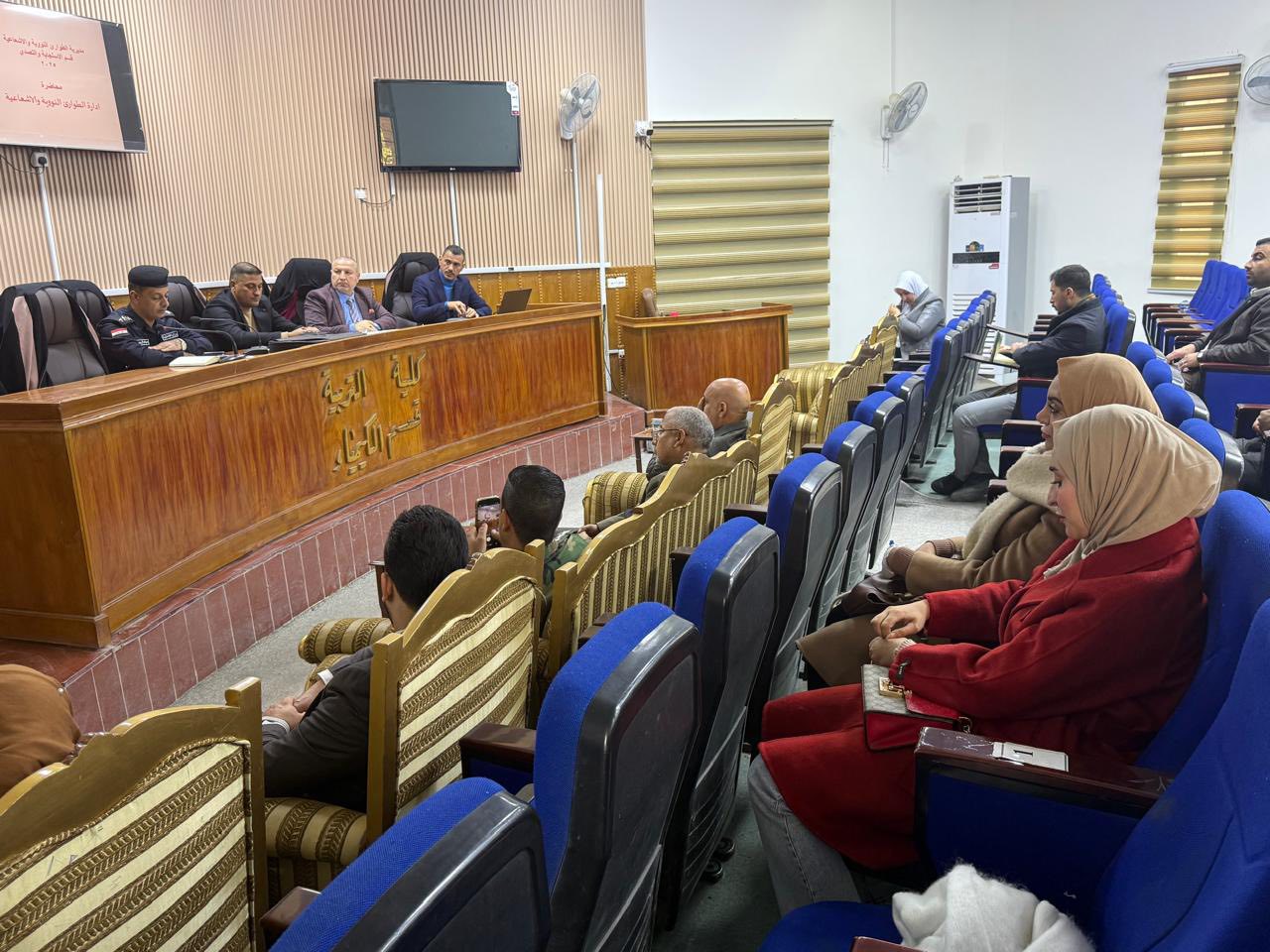
The Chemical, Biological, and Radiological Safety and Security Division at the University Presidency, in cooperation with the College of Education, held a workshop within the framework of the National Program of the National Nuclear, Radiological, Chemical, and Biological Regulatory Authority. This program aims to enhance institutional preparedness and improve the efficiency of relevant authorities in responding to nuclear and radiological emergencies, ensuring the protection of human health and the environment and minimizing potential risks through preparedness and response procedures for nuclear and radiological emergencies and transboundary nuclear accidents. The workshop was conducted in cooperation with the Chemistry Department and the Nuclear and Radiological Emergency Directorate/Response and Response Department of the Authority. The workshop was presented by:
– Professor Dr. Mai Jalil Abdul, Head of the Chemical, Biological, and Radiological Safety and Security Division at the University Presidency;
– Assistant Professor Dr. Suzan Sabbar Mutlaq, College of Medicine;
– Mr. Ammar Abdul-Nabi Muhammad, Director of the Accidents Division;
– Mr. Mohammed Hamza Hassan, Director of the Employment Division at the Directorate of Nuclear and Radiological Emergencies, stated that the workshop addressed several topics, including the risks of radiation and its effects on the environment, the health effects on children from radiation exposure, methods of prevention and protection, the administrative aspects of emergency management, coordination mechanisms, and the distribution of roles among supporting agencies. The workshop also covered organizing preparedness and response procedures, assessing potential risks, and reviewing nuclear and radiological emergency plans and supporting plans, while emphasizing adherence to radiation safety instructions and guidelines.
The workshop concluded with a set of recommendations aimed at enhancing field preparedness, raising the level of radiation awareness, and strengthening public confidence in the role of official institutions in managing nuclear and radiological risks.

No comment