
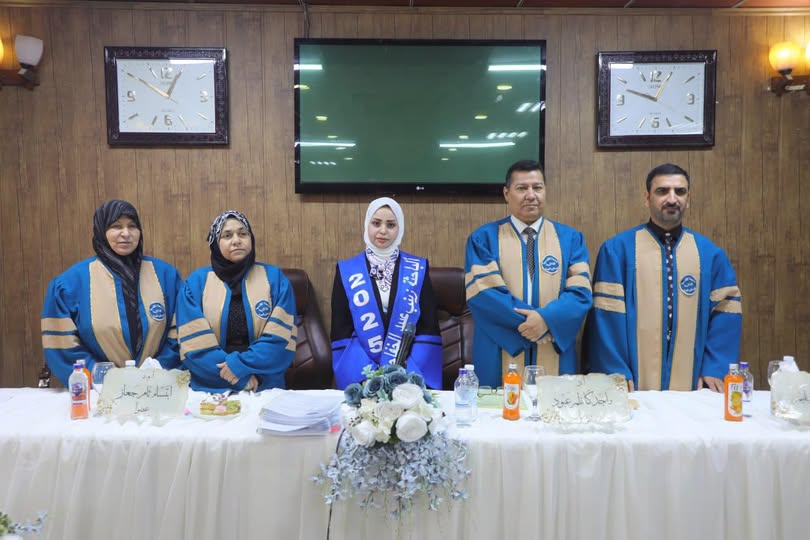
A master’s thesis was discussed in the Department of Life Sciences, College of Education, Al-Qadisiyah University, entitled “Phenotypic and Genetic Profiling of Pseudomonas aeruginos and Some Virulence Factors in Pseudomonas aeruginos Isolated from Different Clinical Cases.” The thesis was presented by researcher Zainab Obaid Subai Al-Khafaji, under the supervision of Assistant Professor Dr. Ahlam Ali Sakhi.
The thesis aimed to shed light on this type of bacteria, investigate some of the patterns within the same species, and identify virulence factors, as it poses a medical risk due to its high resistance to antibiotics and high virulence factors.
The most important conclusions: Genome diversity. The results showed a significant genetic diversity in the isolated Pseudomonas aeruginos strains, indicating the ability of these bacteria to adapt to different clinical environments. The presence of pyocin pigment was also identified in most of the isolated strains, indicating its potential role as a virulence factor.
The most important recommendations: Treatment development. Specifically targeting therapeutic strategies should be developed. The most virulent strains of bacteria, taking into account genetic diversity as well as early diagnosis. Enhancing early diagnostic techniques to detect Pseudomonas aeruginos to reduce clinical complications.
A master’s thesis in the College of Education at Al-Qadisiyah University investigated the phenotypic and genetic typing of pyocin.



No comment