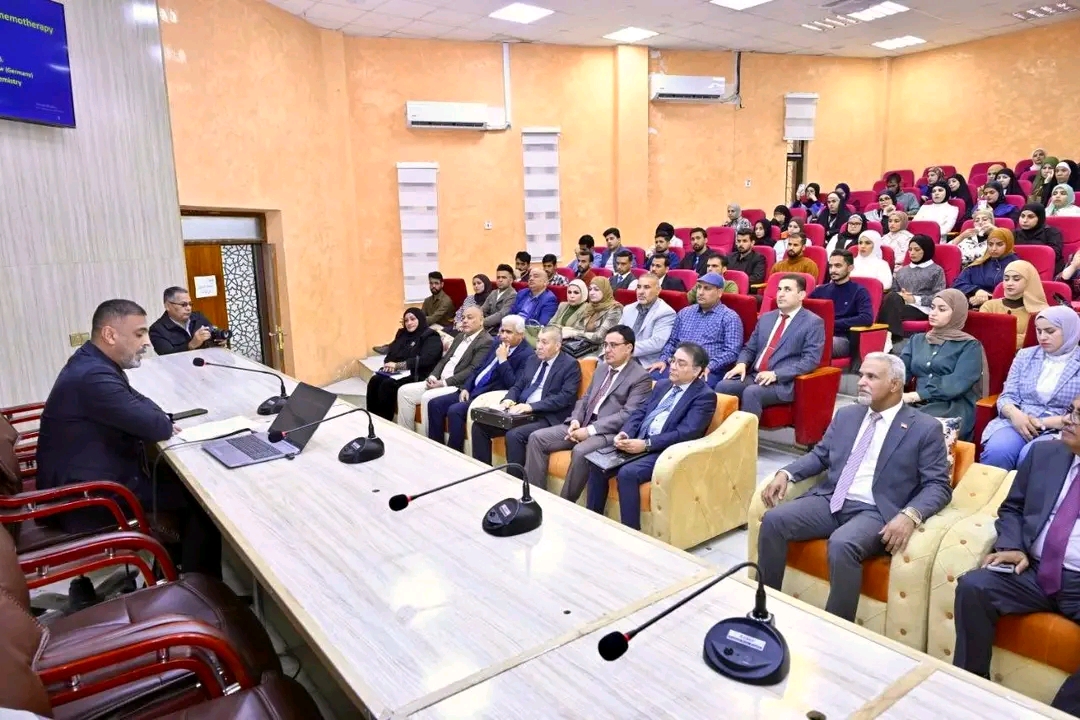
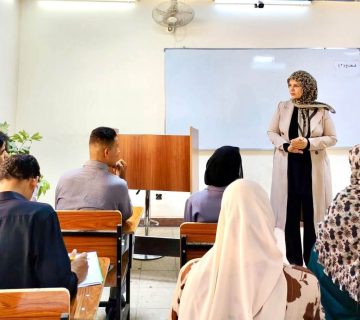
The workshop was presented by Dr. Najm Aboud Al-Masoudi, Scientific Advisor at the University of Konstanz, Germany, and Professor of Organic and Pharmaceutical Chemistry, was attended by the Vice President of the University for Scientific Affairs, Professor Dr. Sattar Abdul-Hassan Al-Fatlawi, a number of professors from Iraqi universities, as well as faculty members and students from the College of Science. The workshop covered the latest research findings in pharmaceutical chemistry for cancer treatment, with a focus on designing new molecules that target biological pathways associated with the most dangerous types of cancer, particularly pancreatic, colon, breast, and prostate cancer. The workshop also covered the causes and types of cancer, explained the genes responsible for these diseases, and outlined modern methods for diagnosing certain types of cancer.
The workshop addressed six key themes:
First: Current Chemotherapy
Second: Targeting Sensitive Genes and Biotransformations
Third: Designing New Generations of Drugs
Fourth: Anticancer Beta-Lactams
Fifth: Advanced Photodynamic Therapy (PDT)
Sixth: Development of Therapeutic Steroids for Cancer
The lecturer reviewed some modern drugs used for various types of malignant prostate cancer. The laboratories of Al-Qadisiyah University – Department of Chemistry, specifically those of postgraduate students under the supervision of Professor Dr. Nabil Abdul-Ridha, pioneered the preparation of a drug called Monoxpril for the treatment of type 3- and PC prostate cancer. This resulted in the registration of an Iraqi patent, led by Professor Dr. Najm Al-Masoudi, Dr. Nabil, Dr. Ali Mahdi, and others from Al-Qadisiyah University. The lecturer also highlighted several important cancer research papers published in international journals, completed by graduate students in the Chemistry Department under the supervision of Dr. Nabil Abdul-Ridha.
The work of researchers Allison (USA) and Munjo (Japan), both Nobel laureates in 2018, was reviewed. Their research focuses on treating cancerous tumors by stimulating the immune system itself or using drugs that inhibit factors that impair its function—a modern approach known as immune checkpoint inhibitors. Furthermore, the lecturer discussed promising vaccines for treating breast cancer that involve multiplying T-cells outside the body and then reintroducing them.
The workshop concluded with scholarly discussions and praise for the scientific efforts of the lecturer and his research team from various universities, particularly Al-Qadisiyah University. The Assistant Dean for Scientific Affairs emphasized the importance of continuing this collaboration and facilitating the work of the Al-Qadisiyah University research team by providing research scholarships to Germany, in coordination with Dr. Asmaa Abdul-Amir Abis, Director of the Scholarships and Cultural Relations Department, who volunteered to give special attention to this matter.

No comment