
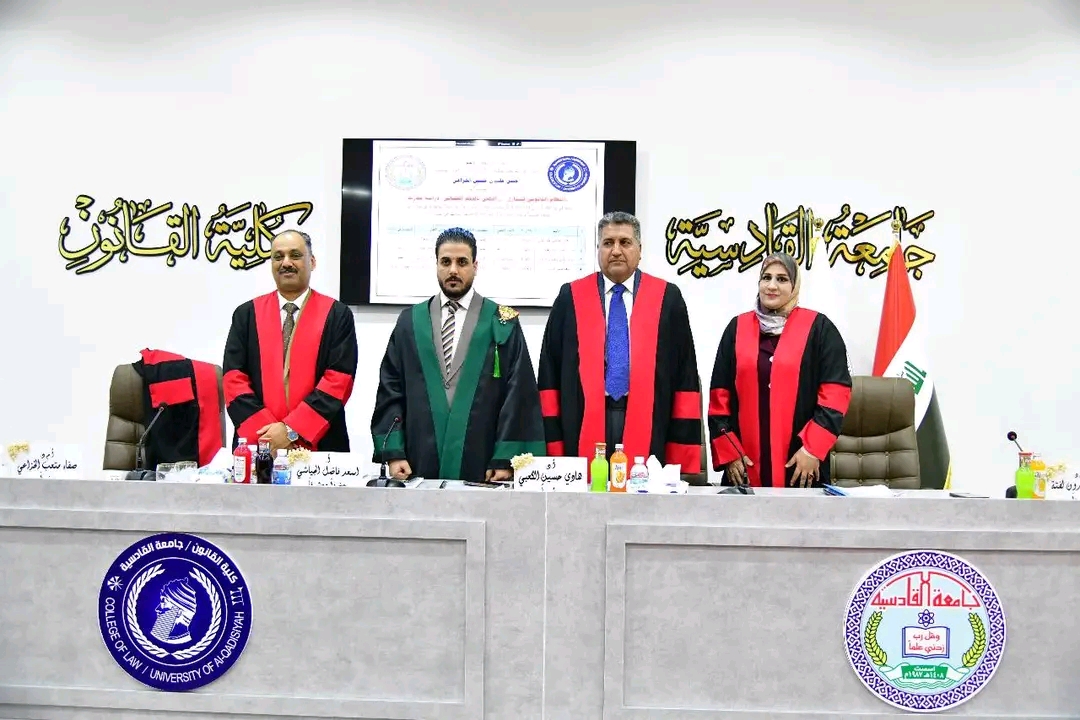
A master’s thesis at the College of Law at Al-Qadisiyah University, titled “The Legal System for Waiving Appeals against Judicial Rulings – A Comparative Study,” was conducted by researcher Hassan Aliwi Hussein under the supervision of Professor Asaad Fadel Mandeel.
The thesis aimed to clarify the legal system for waiving appeals against judicial rulings. Although humans, by nature, do not readily accept or waive their rights because they are keen to protect them, they sometimes declare their waiver, either for their own benefit or because they are forced to do so.
The most important conclusion is that the idea of waiving an appeal is always linked to the idea of forfeiting a right, accepting a ruling, and submitting to the ruling, whether in Iraq, Egypt, or Lebanon. The truth is that the term “waiver of appeal” differs in its meaning from the terms mentioned above, both in terms of the timeframe within which it occurs and the limits it encompasses. The legal consequences of waiving an appeal against a judicial ruling are that the judicial ruling is immune from any form of appeal, and the judicial ruling becomes final unless it relates to public order or dissolution or sanctity.
The most important recommendations are to amend the text of Article 169 of the current Iraqi Civil Procedure Code, given the ambiguity and confusion of terms in this article, on the one hand, and the conflict with appeals by third-party objection, on the other. The Iraqi legislator did not distinguish between the terms “lapse” and “waiver,” despite the fundamental difference between the two terms.



No comment